Last week, in Taita Taveta County, in Kenya, we organised a bootcamp to explore how food waste could become fish feed, together with the community.
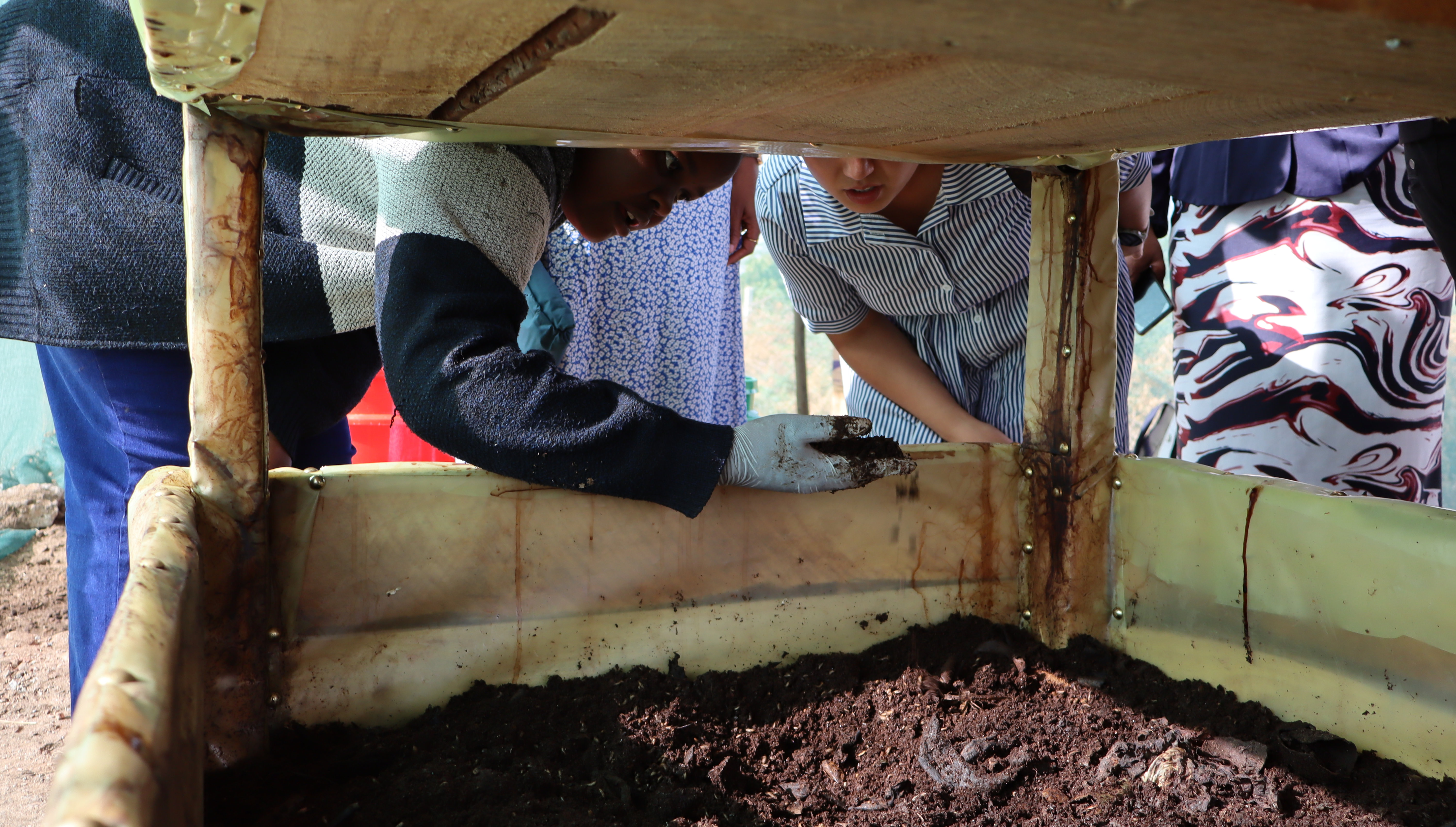
On 13–14 February 2026, students, farmers, food waste collectors, insect breeders, and county representatives came together at Taita Taveta National Polytechnic in Voi for a 2 day co-creation bootcamp. The goal wasn’t to present ready-made solutions, but to jointly explore how local food waste could be transformed into fish feed using Black Soldier Fly Larvae (BSFL), and what coordination would be needed to make such a system work.
The bootcamp, organised as part of the SIFLOOP project, of which Three o’clock is partner, focused on 3 practical questions:
1️⃣ how organic waste can be safely sorted and delivered
2️⃣ how BSFL can be processed into quality fish feed
3️⃣ and how the different actors involved — many of whom rarely interact — can collaborate more effectively.
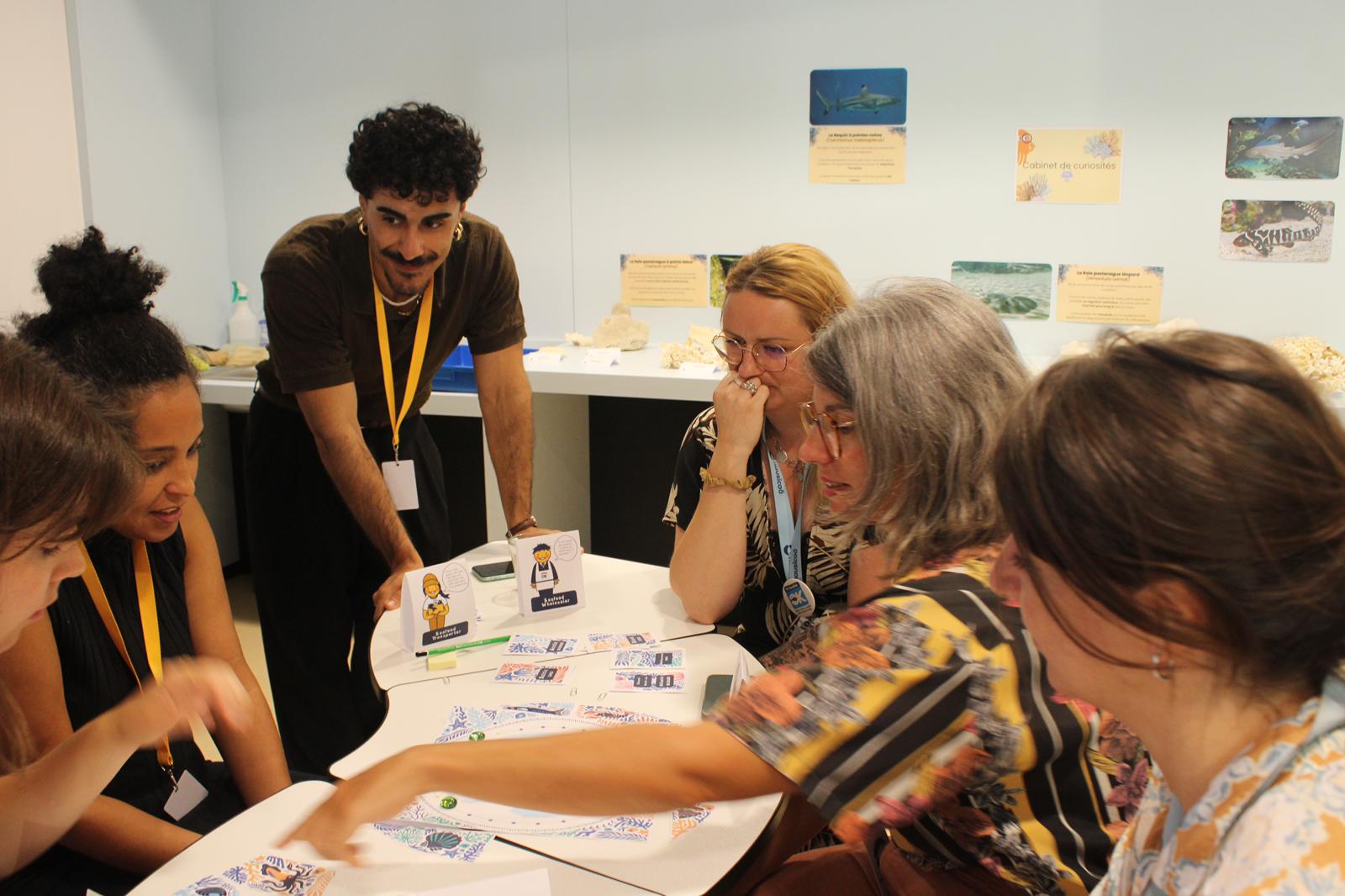
The sessions were structured as a design sprint. Participants worked through shared problem-framing tools, discussed root causes, and explored alternatives by turning challenges into design questions.
By the second day, teams were sketching simple prototypes of waste-sorting systems and role-playing supply chain scenarios using basic materials. The emphasis was on testing ideas quickly and collectively, drawing on local experience rather than abstract models.
“What stood out was the willingness to understand BSFL not just as a technical solution, but as a shared opportunity,” said Marta Arniani, Strategic Designer at Three o’clock. “There was a clear interest in working together and building something collectively, rather than remaining isolated within a value chain. Co-creation shifts who holds power to take action — people aren’t waiting for solutions to arrive, they’re shaping them themselves.”
The methods used, rapid problem framing, group ideation, and low-fidelity prototyping, are common in design and social innovation. Applied here, in the context of insect farming, aquaculture, and waste management in an arid region of Kenya, they allowed those closest to the system to actively shape how a circular model might function in practice.
“We didn’t come with a blueprint,” said Olga Glumac, Participatory Design Lead at Three o’clock. “We came with a blank canvas and created the space for local knowledge to connect. Often, progress doesn’t come from more expert input, but from better-designed conversations.”
The bootcamp concluded with short presentations from each group, followed by feedback and discussion of next steps. These include upcoming business and entrepreneurship training sessions, as well as exploration of co-funding options for a cooperative model.
While small in scale, the exercise showed how even a short, well-structured process can produce concrete, community-owned ideas for closing the loop between food waste and fish production.
The question now is how these early prototypes can be developed further, and whether similar approaches could be applied elsewhere.
______________________________
The SIFLOOP project is part of the INCiTiS-FOOD Programme funded by Horizon Europe. SIFLOOP is led by the NGO MAZIDO International and developed in collaboration with Taita Taveta University and Three o’clock.
The project is delivering an innovative circular solution by integrating Black Soldier Fly larvae (BSFL) farming into local fish farming and related agri-food systems. BSFL offer a cost-effective, high-protein alternative to fishmeal, while simultaneously addressing waste management challenges by transforming organic waste into valuable feed.
SIFLOOP provides two targeted training programmes, one focused on insect farming and one on business development, equipping local farmers and entrepreneurs with the skills needed to engage in insect-based feed production and sustainable aquaculture.
In parallel, this co-creation bootcamp brings together local stakeholders to collectively refine the functioning of the circular economy loop, paving the way for the establishment of a cooperative. Three o'cllock is in charge of the design the overall training programme and support local partners, MAZIDO and Taita Taveta University, in applying systems thinking and coordinating with local authorities.
.png)
.jpeg)
.png)
.png)
.png)